Showing posts with label Book Summaries. Show all posts

Friday, May 27, 2016

Book Summary: Positioning: The Battle for Your Mind by Al Ries and Jack Trout (Through a technology marketing perspective)

One of my favorite books is The Alchemist by Paulo Coelho. In the book, the main character goes on a journey and multiple times along the journey he stops and gets pretty comfortable in a certain location or job, but each time he gets comfortable he eventually proactively abandons the comfort and continues on his journey to achieve bigger and better things.

I really enjoy Product Marketing a lot. I think it’s great fit for my skill set, but I just changed roles to the LinkedIn Sales Solutions Marketing Communications team. I’m following the principles from the Alchemist, abandoning what’s comfortable in an effort to grow and challenge myself. As part of that process, I asked my new manager if she recommend any books to help me in my new role. She recommended the marketing classic Positioning: The Battle for Your Mind by Al Ries and Jack Trout

Positioning: The Battle for Your Mind Paperback – December 13, 2000 by Al Ries  (Author), Jack Trout  (Author), Philip Kotler (Foreword)


Here is a summary, notes and thoughts reading the book. My thoughts from a tech marketing perspective are in italics.

The authors make the point the society is over communicated. It’s harder than ever to change people’s mind, especially through a weak medium like advertising. The book was clearly written before the internet age, so it struck me that if it was a big problem when it was written, it’s a HUGE problem now.

Often, we look to the product for positioning, but in reality we should be thinking about what is already inside the prospect's mind. To succeed in positioning it’s got to be simple and related to what’s already in the customer’s mind or what they believe.

In positioning, there is huge first-mover advantage. In my opinion in technology, it’s not who is first, but the first to critical mass. Apple did not create the smartphone, but were the first to get critical mass. Facebook was not the first social network. Though, you might argue that MySpace had critical mass…..

It’s really hard to displace the leader who holds the number one position in the mind of the consumer. I think this is just as true in technology, it takes a long time or massively disruptive tech. Look at Microsoft. It is still the leader in so many categories, even with often inferior products.

If you’re going to do it, you must relate to the leader. The famous example is from Avis.

Typically, it’s a mistake to challenge the leader head on. Even Google with its almost infinite amount of money and brainpower could not take on Facebook head on with Google+.

Advice for market leaders
-Market leaders should not boast. This makes me think all of the chest pounding that happens after a Gartner Magic Quadrant or Forrester Wave comes out.

-Use a multi-brand strategy for new products. This is easier in a CPG company where the products are not related. At LinkedIn for example, we have products for recruiters, marketers and salespeople all built off the same social network, so it’s much harder to have a completely separate brand because they are all part of the same foundational network.
-Embrace new technologies. Duh.

Advice for followers
-Narrow your appeal. The first company that came to mind was Instagram, they only did pictures and that enabled them to not only compete, but eventually get bought by Facebook.

-Find a hole where you can be first. (Volkswagen “Think small” campaign”

Repositioning the competition
-Make people see the competitor in a different light. Salesforce did this effectively with the no-software campaign. It helped position Oracle as old and slow.

Naming
-Descriptive name is best. Zendesk is an interesting example. Alluding to a happy helpdesk.

-Names that will not limit expansion. The challenges of this I experienced first hand at Salesforce when I was marketing the Service Cloud. Company would say, I don’t need a sales product because of the name Salesforce. In hindsight we should have leaned exclusively on the product name instead of trying to leverage the company’s name.

-For non-product, names hard to oppose. “Clean Air Act”

-Don’t use initials for a name.

-Better to make a new name, then get a free ride on another brand. A brand can only occupy one position. This is challenge for us at LinkedIn.

Lastly, here are a few questions you should think about long and hard if you’re thinking of creating some new positioning.

What to our prospects already believe?

Am I a leader or follower? Be honest…

Where are the positioning gaps in our industry, what could we own?

Enjoy!

Here are two other summaries I found very helpful. One from QuickMBA and the other from Professor Mathur on Slideshare.

Tuesday, March 17, 2015

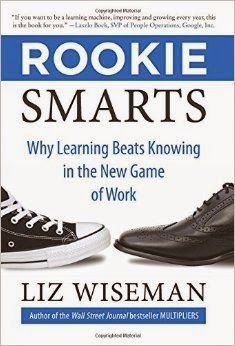
Book Summary: Rookie Smarts by Liz Wiseman

If I face the facts, I'm a rookie. I've only been in the workforce 5-6 years and that's only if you count 2 years of business school. I read Liz Wiseman's book Rookie Smarts hoping to get some ideas on how to navigate a fast paced workplace as a rookie and I got exactly that. Here are my high level takeaways.

picture of liz wiseman book, rookie smarts


You have more to offer as a rookie than you think. Often, when you're early in your career all you can think about is the experience you don't have and the questions you don't know the answers to. In reality, being a rookie can be a competitive advantage.

Hire an expert....get one expert, hire a rookie, get 5 experts. One of the main advantages we have as rookies is that we don't think we know everything. Our instinct to learn from others when we don't have the answers will actually give us a broader perspective and lots of fresh ideas.

Quick wins are important. If you're in a situation where you're in over your head, look for some quick wins to build momentum, something that can be done in a few weeks.

Take small steps and increase the frequency of feedback. Instead of asking your manager how to do something, consult with experts, do your homework and come back with a recommendation. Do this every few days if needed. If you're checking in for feedback frequently, it's unlikely you'll fall flat on your face with a project since you've had so much time to implement feedback and iterate.

Rookie's need a network to succeed. Rookies are successful because they aren't afraid to leverage those around them. If your network is small, don't worry. Leverage classmates, colleagues and friends. Start building your network by going out to lunch with fellow employees. The bigger the network, the more of an asset it will be to you as a rookie and beyond.

Since I write a lot about the advantages of working in fast growing tech companies early in your career, I just want to point out that if you're in a fast growing tech company you might always feel like a rookie. This book will help you think like a rookie, even when you've got more experience under your belt.

I'm about to take on a new project at work that is definitely going to stretch me. After reading this book, I now have a better understanding on how to make being a rookie into an asset.

Monday, March 31, 2014

Book Summary: The Ultimate Question 2.0 by Fred Reichheld.

Last summer I asked Nick Besbeas (LinkedIn's CMO) if he could recommend some marketing books for me to read to prepare to come back to LinkedIn after I graduated. I just finished one of the first books, The Ultimate Question 2.0 by Fred Reichheld.


After reading each book, you'll get a post that has my key takeaways. Here they are......

Avoid "bad profits" at all costs. Bad profits are "profits earned at the expense of customer relationships." A great example of bad profits are the late fees from Blockbuster. Late fees were one of their biggest sources of profit. People were all too eager to abandon Blockbuster for companies like Netflix, who took advantage of Blockbuster's mistake. Netflix built their business off of the mantra "no late fees". Bad profits is one of the main reasons Blockbuster went down in flames.

Current accounting systems encourage bad profits. The book highlighted that current accounting systems do not distinguish between bad and good profits. This makes having another measure that you put alongside your financial reports extremely important. Naturally, the book recommended net promoter score

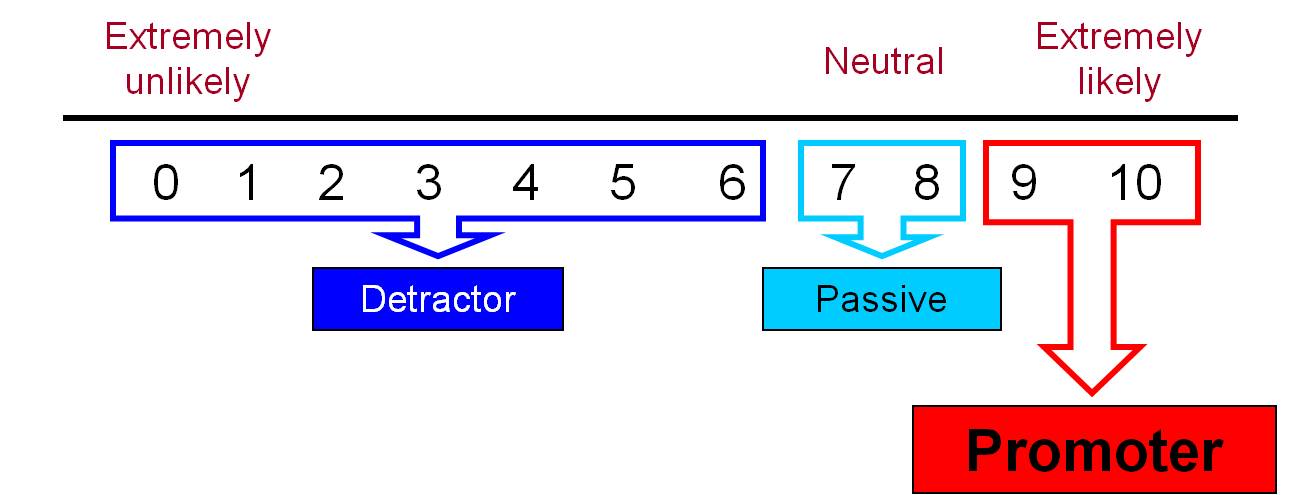
Net promoter score is a simple way to measure customer satisfaction. Net promoter is a customer satisfaction methodology based on one simple question you ask your customers. That question is "How likely is it that you would recommend this company, or this product or service, to a friend or colleague? Most often used on a scale of 0-10. This helps you bucket customers into detractors, passives and promoters.


Though the concept is simple, it is extremely difficult to implement. The companies highlighted in the book as successful users of the net promoter methodology all had large initiatives supported throughout the entire company to focus on using the net promoter score. For the system to really work, everyone from the management to the front line workers need to be committed to trying to create promoters among their customers.

Customer obsession is the winning strategy. Net promoter score, when implemented correctly, is a great forcing function to get the whole company thinking about whether they are creating positive customer experiences everyday.

This is fantastic book if you thinking about revamping how you measure customer satisfaction at your company or thinking of adopting the net promoter score methodology. Anyone that has to create customer satisfaction surveys for their job should read this book. Tactically speaking, if you're creating surveys the shorter the better and this one simple question can tell you a lot.