Showing posts with label Business school. Show all posts

Friday, August 29, 2014

How to Get Your Finances in Shape After Business School

I loved budgeting and financial planning before business school, but once the cash stopped flowing during those two years, it was a lot less fun. I started working again this summer and have spent time recently whipping my finances into shape. This post is a summary of many of the things you need to do or think about after business school to get your finances back in shape.

Remember, I'm not a financial professional by any means, this is my personal opinion and not that of an expert. Though, I have included some ideas from many of my brilliant classmates from the BYU MBA class of 2014. Hopefully this post will give you some things to think about and link to some resources that will be helpful.

save money after business school

Here are some tips to get back in shape. Not in order of importance.

#1 Maximize your use of all the benefits at your new job. Read the fine print of the benefits package. Can you expense your cell phone? Home internet? Gym membership? You might be surprised at some of the lesser known benefits that will help your bottom line.

#2 Live like you are still a student. This one is hard. Once you get that first paycheck you can all of a sudden remember lots of things that you can't live without. The longer that you can live like a student, the better. Money should always feel a little tight, no matter how much money you make, if you're doing it right.

#3 Use online tools like Mint.com to track spending. Which tool is not as important as having some system that lets you see your finances aggregated across all different types of accounts. If you can't easily answer these questions below, then you really need one.

As of today, what is your net worth?
How much do you spend a month on average?
How much in fees have your banks been charging you this past year?

#4 Save money. Most "experts" recommend you try to save 10-15% of your salary. You should have a set amount each month that is going straight into a savings account.

#5 Rebuild emergency fund. 6 months to 1 years worth of expenses in a relatively liquid account is what's recommended. Though it's tempting to pay back all your student loans first, your interest rates on your loans would be relatively low compared to the kind of debt you would have to take on if you lost your job and had no savings.

#6 Get your 401k Employer Match. It's free money! Contribute at least enough to get the match, but in reality shoot to contribute even more.

#7 Participate in your ESPP (employee stock purchase plan) Read this article from Wealthfront that explains why this is a no brainer.

#8 Set goals. Having goals makes your day to day financial decisions more meaninful. If you know that you will have X number of dollars saved a year from now if you follow your plan, then blowing your budget one month will have real consequences in your mind.

#9 Pay down student debt. Once you have your emergency fund set and you are getting the max amount of 401k match from your company, the rest of the money should go to paying down your debt as quickly as possible. Prioritize the higher interest loans first.

#10 Establish college funds. If you have kids, there are 529 college savings accounts that can help you prepare for that big future expense. After business school is a good time to start. Check out savingforcollege.com

#11 Set up a FSA/HSA account. You'll have to do some research to see if this is a good fit for you, but it could have some great tax implications.

#12 Talk to a professional. It might be the right time to talk to an accountant, lawyer and maybe even a financial planner.

#13 Get the right insurance. Make sure that you're totally covered and not a risk for a major financial disaster, whether this be with car insurance, life insurance or home owners insurance.

Got a few ideas you'd like to share? Please post them in the comments.

Monday, May 26, 2014

Twitter Basics for MBA students

Twitter can be a great tool for students to build professional relationships, find a job and stay up to date on what is happening in your industry. Before you dive into Twitter, I recommend you get a few of the basics down. Below are a few basics you want to master. These tips are for people that want to use Twitter strategically for their careers, if you don't care about that, you probably won't find this advice as helpful.

1. Decide what you're going to tweet about. It's easier to build a following on Twitter when people know what you will be tweeting about. If you're all over the place, it'll be harder. This does not mean if you tweet about marketing, you can't tweet about your favorite NBA team. Just try to be consistent. For example, I tweet 90% about marketing, technology and networking. 10% is whatever I'm in the mood to tweet about.

2. Remember that everything is public. Think before you tweet. People have lost their jobs for the things they have tweeted about. A PR executive with some racists tweets is the latest casualty.

3. Put up a professional profile picture. Just like LinkedIn, if you're using Twitter to expand your network, it can help to have a professional picture. At least put some kind of picture up. No one wants to see the Twitter egg.

twitter egg with an x


4. Fill out the description. This is your chance to let people know what you'll be tweeting about. I recommend you link to your LinkedIn profile, blog or personal website in the description.


example of a twitter description

5. Post consistently. If you never post, many people will eventually stop following you.

6. Follow people. Follow anyone or anything that interests you. Follow companies you are interested in or people you admire.

7. Favorite tweets. This is a simple way to let people know you like what they are sharing. Twitter notifies you when someone favorites your tweet. This is also a great way to get someone to follow you back.

example of favoriting a tweet

8. Retweet people. This is a way for you to share great content that you find with your network. Just like when you favorite, the user is notified and there is a good chance they might follow you back.

9. Respond to tweets. The great thing about Twitter is most people on it are the sort of people that want to have conversations with the Twitter community. Comment on posts, or respond to questions. You'll be surprised who might respond back.

10. Be yourself. The more authentic the better.

Twitter can be a valuable tool as you navigate your career. Have fun with it and find what aspect of Twitter creates the most value for you personally. Good luck and happy tweeting.


Monday, May 5, 2014

Why I Chose BYU For My MBA

Where you go to get your MBA is a very complicated and personal decision. I've had a fantastic experience these past two years at BYU, so I thought I'd write down some of my thoughts on why I came to BYU for my MBA. Below are my top reasons for choosing BYU.

Old school BYU logo

It's a great school. It's a top 30 program. Different rankings put BYU in different places, but Forbes most recently ranked BYU as #17.

You can not beat the cost. I did not want debt loads from school to dictate any career decisions post MBA. The cost of tuition and living in Provo is astronomically low. Graduating with little or no debt gives you much more flexibility in your career choices right out of school and the next 5-10 years. US News just put out a list of which schools provide the most financial value at graduation. BYU is the highest ranked school on the list. To put this in perspective, I saved my entire second year's worth of tuition over my summer internship.

The people I knew who went there.  I did not know it at the time, but growing up I was surrounded and influenced strongly by BYU MBA's in my church, community and Boy Scout activities. Even as a teenager, I admired and respected those leaders. During my undergrad I met and became friends with some BYU MBA's and I really liked them and admired their career ambitions. They seemed like my kind of people.

It gets me to where I want to go. I really thing this is the bottom line for choosing a business school. Can it help you get to where you want to go? When I looked at all the random things I want to do in my career, I determined that a BYU MBA would help me at many steps along the way. This was a tough question for me because it takes a lot of educated guessing. For example, just because you go to a school that your dream company recruits out of, does not mean you'll get a job at that company. You might be better off at a different school and a little more hustle. It's also really hard to value the future value of a network from any school. It might be worth millions or close to nothing. I just made the best decision with the data I had.

It's a tough decision to figure out what school to go to, but I'm extremely happy with my choice. I think a big part of that is that after I decided, I didn't look back and made the most of all the opportunities I had during those two years. Whatever I put into the experience, I got back even more. It could not have worked out better.

P.S.- Cafe Rio might have had a slight part in the decision.
Picture of a cafe rio burrito

P.S.S. - Here is a quick video on how I felt about the professors a BYU, feel free to check it out too. 


Monday, March 3, 2014

Advanced LinkedIn Tips For MBA Students

*While I'm writing this from the perspective of an MBA student, all these LinkedIn tips work for any sort of student.

You've mastered the basics of LinkedIn. Your profile is filled out. You've stopped connecting with strangers. You always send a personalized message when you connect. What's next? Below are my advanced tips for students who want LinkedIn to be a competitive advantage for them in finding a job and managing their career.

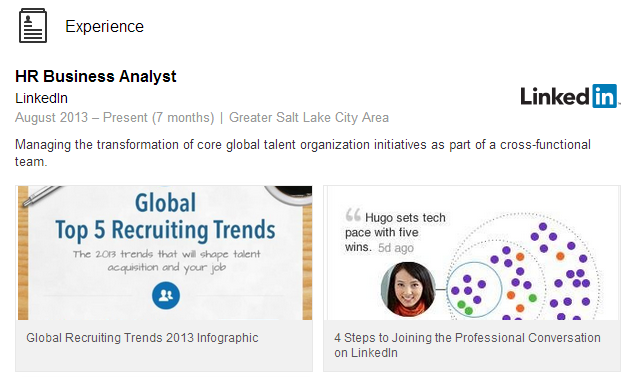
1. Embed work that you've done. It's your reputation, not your resume. Show everyone what you can do. If you have any examples of your work that you're proud of, put them under the job where you created it. LinkedIn lets you embed videos, Slideshare and links to webpages.

Image of some presentations embedded in a LInkedin profile


2. Create profiles in other languages you speak. I wrote another post about why you should do this. You can read it here. It's easy to create a profile in another language in LinkedIn.

"hello" word cloud in multiple languages

3. Optimize your profile for the right keywords. Make sure the key words you want to be found for are in your profile. LinkedIn works a lot like a search engine. If the words or job titles you want to be found for are not in your profile, you'll be hard to find.

Screenshot of the linkedin search bar

4. Join groups strategically and participate. Join groups that are the watering holes of the people you want to be associated with. Jump in on the conversations that are interesting. Groups are a great way to show expertise and build new relationships.

5. Automate some of your sharing. I've found that it is a lot easier to share content on LinkedIn if you use a tool like Buffer. Consistent sharing of relevant content about your industry will keep you top of mind in your network. Buffer queues up articles so they are shared in the future. For example, you can have a post go out every Monday at 3:00 pm. If you find 7 articles you'd like to share one morning, you can have them easily scheduled to go out over the next 7 days. The advanced scheduling helps you be consistent and saves you the hassle of trying to find a new article to share everyday. Check out this article from Buffer on how it works.

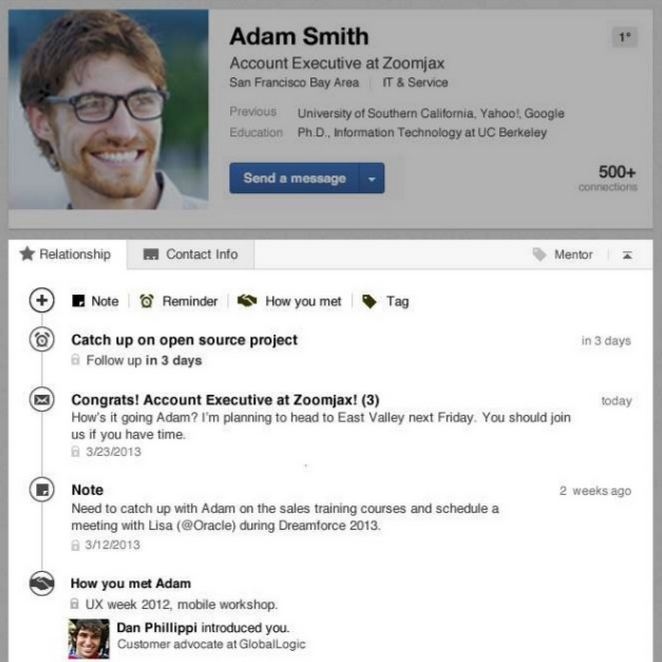
6. Sign up for advanced contacts functionality. Go to contacts.linkedin.com, hit the "get started" button. As you go through the sign up process, don't forget to sync LinkedIn with your email and calendar. For more details on what these features can do, check out this article from Hubspot on how to use LinkedIn contacts. As an MBA student, these features will save you countless hours as you use LinkedIn to build your network and find a job or internship.

Screenshot of the email integration with Linkedin contacts

7. Get recommendations- I recommend getting one or two for each major role. While it's tempting to get them from a fellow MBA student, try to get recommendations from professionals you worked with in your jobs.

8. Manage your endorsements- If you are getting endorsed for something you don't want to be endorsed for, take it down. Check out this article to learn how to do it. If there is something you'd like to be endorsed for, send an email to a bunch of fellow MBA students or a small trusted group of friends/colleagues asking them to endorse you. Definitely do not SPAM everyone you know asking for an endorsement. Also, only ask to be endorsed for skills that you legitimately feel you have some expertise in.

List of LinkedIn endorsements


I hope you've enjoyed these advanced LinkedIn tips for MBA students. If you have done all these things, you are well on your way to becoming an LinkedIn expert. If you missed my first post on this topic LinkedIn Basics For MBA Students, click the link to get the basics down before you try all the steps I've outlined above. If you're looking for more tips on how to write your LinkedIn summary check out LinkedIn Summary Examples for MBA Students. If you have any other questions, please comment below. Also, if you have some advanced LinkedIn tips I'm missing, I'd love to hear about them.

Thursday, January 9, 2014

LinkedIn Basics For MBA Students

I often get asked what tips I have for students just starting to use LinkedIn or wanting to leverage it more effectively to help them find a job. The first thing I always say is to remember that the majority of the time employers will Google you when they are evaluating you as a candidate. Not only that, but professionals are very likely to look you up on LinkedIn before they meet with you. This has become so frequent that LinkedIn has really transformed into your reputation, not just a online resume. It is a one stop shop for someone that wants to find professional information about you. I strongly recommend that you at least follow these basic guidelines for your LinkedIn profile.

1. Use a professional picture- A picture of just you, that clearly shows your face, in attire that represents the dress standards of your industry, or the industry you'd like to be in.

2. Put your work experience up your profile- Add any work experience that is relevant to your goals and make sure their is enough information that people can easily understand what it was you actually did.

3. Create a custom URL- This creates a shorter URL for your profile that will be easier to share and will improve the ranking of your profile in Google search results. Click here to learn how to set it up.

4. Do not connect with people you do not know- LinkedIn should be a online reflection of real relationships, do not connect with people that you do not know.

5. When you add a connection, send them a personal message- When you add someone as a connection, it gives you the option to send them a personal message. Take the chance to reconnect.

Below I've embedded a 10 minute long video that goes into more detail. My classmate Elizabeth Hilton interviewed me for the Marriott MBA Today show, which is a student run program where BYU MBA students do interviews with different people about topics relevant to our MBA students.


If you're ready for some advanced tips check out this post, Advanced LinkedIn Tips For MBA Students

Tuesday, January 7, 2014

What It Is Like To Be A MBA Intern At LinkedIn

I spent my summer internship during business school working for LinkedIn as a Product Marketer. I had a fantastic experience and have accepted a full time offer to return as a Product Marketing Manager in their Sales Solutions business. I've been doing a lot of informational interviews about my experience for friends, classmates and friends of friends. Below are the things that I usually highlight about my experience. 

1. LinkedIn is serious about their culture and values. It's not just something written on the wall. Read this interview of our CEO Jeff Weiner to understand his take on it. Also, over the summer I heard one of our sales people explain the "members first" value to a potential customer as a response to why we would not do some of the things they would have liked us to do. If sales people are explaining our values on sales calls, it's the real deal. 

2. Innovation is alive and well at LinkedIn. Read this article from Wired magazine to understand some of the programs that LinkedIn has put in place to encourage innovation among their employees. I watched the INcubator finals first hand and saw Reid Hoffman and Jeff Weiner green-light some great innovative projects from all over the company. 

3. Interns are well integrated into the company and a lot of thought is put into the internship program. Interns are invited to everything, including the all hands every two weeks with the CEO and other senior leaders. I felt welcome at any company event. Jeff Weiner and Reid Hoffman both spent time with the interns. The marketing group had an offsite in Monterrey for a week and all the marketing interns were invited. I even participated in the wellness program and got some awesome swag. There were also plenty of fun intern only activities, a cruise in San Francisco bay, sushi making competition and many others.

4. Talent is important to LinkedIn. I was invited to give a personal presentation explaining what I did over the summer to LinkedIn's CMO Nick Besbeas my last week. It was just Nick, myself and my manager. A busy CMO taking 30 minutes for a 1x1 with each intern in marketing, that meant a lot. I can't think of a better place to learn and grow after business school 

I hope this helps you understand a bit about what it's like to intern at LinkedIn. I wrote for LinkedIn's corporate blog a post about how I got my internship. Click here to see it. 

Lastly, I brought my GoPro camera out to California for the summer and took some footage at work. I made a quick 90 second video about what it's like to be an MBA intern at LinkedIn, enjoy!