Friday, September 19, 2014

How to Get a Job in Product Marketing

My first job out of college was a entry level web analytics role in the online marketing group of Salesforce.com. My coworkers were amazing and the company was growing like crazy, but after a year or so I realized the role was not a great fit for me. I spent a few months shopping different roles all over the company. Through conversations with product marketers, and my own observations, it seemed that product marketing was where I wanted to be. I was drawn to it because you get to be strategic, creative, analytical and work on a variety of projects. After a few failed attempts, I was able to transfer into my dream role in product marketing.

Since I made the switch, I often get asked, "how do you get a job in product marketing?". To those of you that are thinking this might be a good fit for you in the future, I've mapped out a few of the common paths to a career in product marketing that I've observed in Silicon Valley.

Transferring within the company- It's not uncommon to get into product marketing from a different role within the company, just as I did. Most commonly this happens from within the marketing department, but I know several people that have come from roles as diverse as sales and PR.

Here is how David James, Director of Product Marketing at Lithium Technologies did it.

"My career started in the agency world of public relations and advertising. A technology client hired me to come "in-house" as a marketing generalist. Overnight, I traded working alongside creatives, account services and traffic to collaborating with engineers, product managers and database admins. And I loved it. Slowly, I discovered there was a huge need in marketing to tell a compelling story -- but still know the product inside and out. It was the perfect marriage of marketing creativity and technology know-how. 

Bottomline: If you're in product marketing (or want to get there), know your product/service inside and out. Meet with product managers. Become their friends. Have a seat at the PM table and be the voice of the customer." 


Going to business school- Product marketing is a popular post MBA job. Companies like HP, Intel, Adobe, LinkedIn and Google will take product marketing MBA interns for the summer. This can be a great way to get your foot in the door to a career in product marketing. Many of those same companies will often hire product marketing Managers right out of business school, even if they did not intern there.

Here is how Neal Armstrong, Sr. Product Marketing Manager at Symantec did it.

"I came into B-School from the finance industry with almost no marketing experience. To learn more about product marketing I found a class that allowed students to complete projects for local companies to earn class credits. There was a project focused on marketing with Adobe. My credits were already maxed, but I joined the project anyways. Throughout the project I found out more about how vital product marketing was to an organization. I expressed my interest in continuing my work as a summer intern. The Adobe employees I worked with on the project knew I was excited about working with Adobe and they personally recommended me. I had received other internship offers from large tech companies outside of product marketing for the summer. After our final project was presented, the team manager and I sat down and talked. At the end of our discussion, and with other offers in hand, I secured my dream internship and was able to continue my project as MBA Product Marketing intern." 

After some time in consulting- Lots of former consultants end up as Product Marketers, more often than not they had been consulting in a similar industry where they end of working. It's easier to get a product marketing job if you've established some domain expertise your future employer values.

Here is how Elizabeth Maples a Product Marketing Manager at LinkedIn did it.

"I went back to get my MBA a few years ago, but I was one of those “nontraditional” applicants: I’d been working on the editorial side of book publishing, where I spent my time searching for new authors to put under contract, and then working with them to turn an early idea into a physical book (ah, the days of physical books!). Coming out of business school, I knew I eventually wanted to get into (non-physical!) media or technology, but still felt like I needed to build on the strategic and analytical skills I’d learned in school. Consulting was a phenomenal training ground—and gave me the chance to work at a number of big companies in the industry. With that experience, I was much better positioned for PMM positions (and I’m loving it now!).

Pro-tips: If you’re taking the consulting route, try to get on product strategy or marketing-related projects in your desired industry. Also look for places that have a history of hiring consultants into PMM roles; they’re most likely to see the parallels in the skill-set."


These are some of the well worn paths, but there is always the road less traveled by. I would love to hear in the comments some of the other ways people have found their way into Product Marketing.

Friday, August 29, 2014

How to Get Your Finances in Shape After Business School

I loved budgeting and financial planning before business school, but once the cash stopped flowing during those two years, it was a lot less fun. I started working again this summer and have spent time recently whipping my finances into shape. This post is a summary of many of the things you need to do or think about after business school to get your finances back in shape.

Remember, I'm not a financial professional by any means, this is my personal opinion and not that of an expert. Though, I have included some ideas from many of my brilliant classmates from the BYU MBA class of 2014. Hopefully this post will give you some things to think about and link to some resources that will be helpful.

save money after business school

Here are some tips to get back in shape. Not in order of importance.

#1 Maximize your use of all the benefits at your new job. Read the fine print of the benefits package. Can you expense your cell phone? Home internet? Gym membership? You might be surprised at some of the lesser known benefits that will help your bottom line.

#2 Live like you are still a student. This one is hard. Once you get that first paycheck you can all of a sudden remember lots of things that you can't live without. The longer that you can live like a student, the better. Money should always feel a little tight, no matter how much money you make, if you're doing it right.

#3 Use online tools like Mint.com to track spending. Which tool is not as important as having some system that lets you see your finances aggregated across all different types of accounts. If you can't easily answer these questions below, then you really need one.

As of today, what is your net worth?
How much do you spend a month on average?
How much in fees have your banks been charging you this past year?

#4 Save money. Most "experts" recommend you try to save 10-15% of your salary. You should have a set amount each month that is going straight into a savings account.

#5 Rebuild emergency fund. 6 months to 1 years worth of expenses in a relatively liquid account is what's recommended. Though it's tempting to pay back all your student loans first, your interest rates on your loans would be relatively low compared to the kind of debt you would have to take on if you lost your job and had no savings.

#6 Get your 401k Employer Match. It's free money! Contribute at least enough to get the match, but in reality shoot to contribute even more.

#7 Participate in your ESPP (employee stock purchase plan) Read this article from Wealthfront that explains why this is a no brainer.

#8 Set goals. Having goals makes your day to day financial decisions more meaninful. If you know that you will have X number of dollars saved a year from now if you follow your plan, then blowing your budget one month will have real consequences in your mind.

#9 Pay down student debt. Once you have your emergency fund set and you are getting the max amount of 401k match from your company, the rest of the money should go to paying down your debt as quickly as possible. Prioritize the higher interest loans first.

#10 Establish college funds. If you have kids, there are 529 college savings accounts that can help you prepare for that big future expense. After business school is a good time to start. Check out savingforcollege.com

#11 Set up a FSA/HSA account. You'll have to do some research to see if this is a good fit for you, but it could have some great tax implications.

#12 Talk to a professional. It might be the right time to talk to an accountant, lawyer and maybe even a financial planner.

#13 Get the right insurance. Make sure that you're totally covered and not a risk for a major financial disaster, whether this be with car insurance, life insurance or home owners insurance.

Got a few ideas you'd like to share? Please post them in the comments.

Tuesday, August 12, 2014

How To Get A Job Interview At LinkedIn

The simplest and most straightforward way to get a job interview at LinkedIn is to meet the job qualifications for the job you are applying for and have a current employee refer you.

This advice works for a lot of companies, but I've seen it work first hand to get a job interview at LinkedIn. In my short time at LinkedIn, I've referred two people for jobs and one of them got the job and the other one is in process. Both of the people I referred were interviewed promptly after my referral. 

This is my buddy John, I referred him to LinkedIn and now he sits behind me. 

In general, referrals from current employees are much more likely to be seen by a recruiter, than from applying online. It should be no surprise that this is particularly important at LinkedIn where one of the 5 dimensions of the culture is "relationships matter." To learn more about what that means, check out this post from LinkedIn's founder Reid Hoffman. A referral is really key to getting an interview at LinkedIn. 

If you are hoping to get an interview at LinkedIn or have more questions about how to get a job at LinkedIn, feel free to contact me. I'll try to help you as much as I can. There are many people that helped me land at LinkedIn and I'm happy to pay it forward. You can contact me through this blog or on Twitter. I hope this post on how to get a job interview at LinkedIn helps you land your dream job!

*As usual, this is my personal opinion and not representing LinkedIn the company.

Tuesday, July 29, 2014

My Welcome To San Francisco Hug

I moved to San Francisco to take a job with Salesforce right out of my undergrad without having ever visited San Francisco in my life. I was excited for the adventure, but generally speaking I was freaked out, intimidated and paranoid about some aspects of big city living.


My first day of work I needed to catch a shuttle from the financial district to take me to new hire training in the San Mateo office. I was crashing at a friends house in the West Portal neighborhood at the time. I was a really worried about getting lost, missing the shuttle etc., so I left a few hours early. I got there really fast (the MUNI is not crowded at 6am). I got to the shuttle stop outside of Salesforce HQ and was just standing there for over an hour trying not to look like a country bumpkin. I did not know what the dress should be so to play it safe, I wore my best suit with a french cut shirt.

As the sun was coming up, some guy that was probably a little drunk came up to me and said. "DANG, YOU LOOK LIKE CLARK KENT!" He then proceeded to give me a bear hug. After he let me go, he looked me in the eye and said "wait, you also look like that kid from Jerry Mcguire." He then turned around and walked away. Welcome to San Francisco.


Clark Kent

Kid from the movie
Me


Monday, July 14, 2014

Tips To Prepare For A Job Interview At LinkedIn

I've had a lot of friends, or friends of friends get interviews at LinkedIn lately. I've been asked several times if I have any tips for the interview process. I thought I'd compile a few tips of my own here and link to some great advice too. As usual on my blog, this post is my personal opinion and not representing LinkedIn the company. Here are my tips to prepare for a job interview at LinkedIn.

meme about a recruiter adding you on LinkedIn

1. Spruce up your profile. It should already be awesome, but if not, it's better late than never. It will go a long way to show that you actually believe in and understand the company. Great picture, work history....the whole nine yards.

2. Check Glassdoor.com for interview questions by role. You can find the list here.

3. Read this article on Mashable. If you scroll down to the end they get into some great interviewing tips.

4. Understand the culture. Read this interview of Jeff Weiner in the NY Times and check out the Slideshare below on our culture.


5. Think about the product. Don't be surprised if you get a question like, "what is your favorite feature?" or "what feature would you add?"

6. Be authentic.

7. Show your passion. If you really are passionate about the mission of the company or the products, make sure it come through in your interview.

8. Get the names of your interviewers and do your homework. Check out the LinkedIn profile of those that are interviewing you beforehand, use that information to your advantage. See if you have mutual contacts.

Good luck with your job interview at LinkedIn. I hope these tips help you prepare. If you have any other tips that you think would help you prepare for a job interview at LinkedIn, please put them in the comments. Also, if you're looking for general job interviewing tips, please check out How to Prepare for a Job Interview

Monday, June 30, 2014

How To Get A Job At LinkedIn

Last week I started a full time job at LinkedIn. I feel very fortunate to work for such a great company. I learned a few things as I went through the process on how to get a job at LinkedIn, so I thought I'd share the knowledge with future LinkedIn employees out there.

Picture at LinkedIn Beijing office
This is a picture of me visiting LinkedIn's Beijing office when I was traveling through China a few weeks before I started. 

A disclaimer to my readers, this is my personal opinion and is in no way endorsed by LinkedIn. This advice is based off my personal experience and observations.

Here are 4 steps that will guide you on your journey to get a job at LinkedIn.

1. Have the right skills- Like most places, if you read through the job description and you do not have the skills required it will be extremely difficult to get that job. If you do have those skills, make sure they are explicitly stated in your resume using the same vernacular as in the job description. If you don't have them...well get busy!

2. Leverage relationships- When I was trying to get a job at LinkedIn, I found a second degree connection on LinkedIn that was working in the group I wanted to work in and got an introduction. He is now my boss's boss. You can read more about how I did it on a post I wrote for the LinkedIn blog last summer here. A personal connection to the company and employee referral is probably the most important step to get a job at LinkedIn.

3. Show your passion- At LinkedIn people are really passionate about what they do and they want to work with other passionate people. Make sure it comes out in your resume and interviews.

4. Do your homework- While this is probably a little more general advice for any job, I think it is still worth mentioning. Find out as much as you can about the company, the team you're interested in, the products and the individual decision makers. This will help you impress those looking at your resume and interviewing you.

If you'd like to work at LinkedIn or have more questions about how to get a job at LinkedIn, feel free to contact me. I'll try to help you as much as I can. There are many people that helped me find my dream job and I'm happy to pay it forward. You can contact me through this blog or on Twitter. I hope this post on how to get a job at LinkedIn helps you land your dream job!


Monday, June 16, 2014

Why You Should Think About Moving To Silicon Valley

After leaving Silicon Valley to go to business school in Utah, a lot of friends and classmates have asked me my thoughts about living and working there. I've accepted a job back in the bay, so of course this is my opinion and completely biased, but here are the top reasons for heading back.

Picture of the golden gate bridge from underneath

The companies. Check any list of top places to work in the US (CNN, Forbes) and you'll see many companies from the bay area. Not only that, but many of these companies are experiencing fast growth. My experience has been where there is growth, the opportunities are all around. There are few places in the world where so many great companies are in such close proximity. This makes it extremely competitive for talent, so companies have to treat you well to keep you.

Logos from Google, Twitter, LinkedIn and Apple


The people. The bay area is top in the nation for overall education level. I have found that people in the bay area are driven, educated, passionate and generally open minded. I remember shortly after moving there, when for first time I met someone at work that went to an Ivy league school, I was really intimated. After a few months, I stopped being intimated and tried to learn as much as I could from the smart people around me. Surrounding myself with such talented and ambitious people really motivated me to step it up. Just living there broadened my vision of what I could accomplish in my career and life.

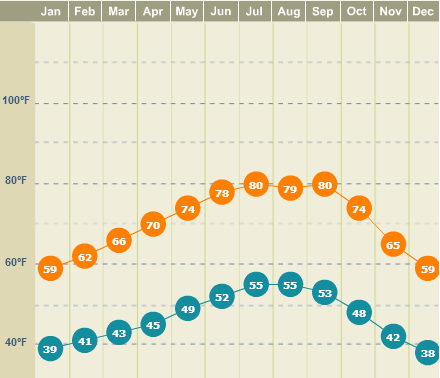
The weather- It's amazing. Check out the average temperatures. I rode my bike to work year round. You won't have to deal with scorching summers or frozen winters, it's a very moderate climate.

average monthly temperatures for mountain view, CA
Mountain View, CA


The fun- There is a whole lot to do, almost no matter what you're into. Geographically, there is surf, mountains, cities, snow and lakes all within a short drive. It's a great scene for food, music, art, philanthropy, nature, tech and just about whatever else you like.

4 guys on the beach about to surf in pacifica


Oh and of course, to be fair, here are the two biggest cons so you know what you're getting into. 

It's really expensive- Check out this cost of living calculator. It's one of the most expensive places to live in the country. This makes it really difficult to buy a house. Though, companies in the bay generally pay more and your salary is likely to increase much faster because of how competitive it is for talent. I've found that besides housing, a lot of the cost comes down to your lifestyle choices. If you only spend on what is most important to you, it's possible to save.

It's a bubble- You know, when the general population forgets that anyone else lives or thinks any differently? It's not always like that and not everyone is trapped, but check out this funny article about some serious bay area first world problems.

If you can handle not buying a house for a while, I believe the pro's seriously out weigh the con's. It is a fantastic place to live and have a career. Your quality of life will likely be improved. If you need more convincing, shoot me an email, or marry someone from the bay area like I did.