Monday, June 30, 2014

How To Get A Job At LinkedIn

Last week I started a full time job at LinkedIn. I feel very fortunate to work for such a great company. I learned a few things as I went through the process on how to get a job at LinkedIn, so I thought I'd share the knowledge with future LinkedIn employees out there.

Picture at LinkedIn Beijing office
This is a picture of me visiting LinkedIn's Beijing office when I was traveling through China a few weeks before I started. 

A disclaimer to my readers, this is my personal opinion and is in no way endorsed by LinkedIn. This advice is based off my personal experience and observations.

Here are 4 steps that will guide you on your journey to get a job at LinkedIn.

1. Have the right skills- Like most places, if you read through the job description and you do not have the skills required it will be extremely difficult to get that job. If you do have those skills, make sure they are explicitly stated in your resume using the same vernacular as in the job description. If you don't have them...well get busy!

2. Leverage relationships- When I was trying to get a job at LinkedIn, I found a second degree connection on LinkedIn that was working in the group I wanted to work in and got an introduction. He is now my boss's boss. You can read more about how I did it on a post I wrote for the LinkedIn blog last summer here. A personal connection to the company and employee referral is probably the most important step to get a job at LinkedIn.

3. Show your passion- At LinkedIn people are really passionate about what they do and they want to work with other passionate people. Make sure it comes out in your resume and interviews.

4. Do your homework- While this is probably a little more general advice for any job, I think it is still worth mentioning. Find out as much as you can about the company, the team you're interested in, the products and the individual decision makers. This will help you impress those looking at your resume and interviewing you.

If you'd like to work at LinkedIn or have more questions about how to get a job at LinkedIn, feel free to contact me. I'll try to help you as much as I can. There are many people that helped me find my dream job and I'm happy to pay it forward. You can contact me through this blog or on Twitter. I hope this post on how to get a job at LinkedIn helps you land your dream job!


Monday, June 16, 2014

Why You Should Think About Moving To Silicon Valley

After leaving Silicon Valley to go to business school in Utah, a lot of friends and classmates have asked me my thoughts about living and working there. I've accepted a job back in the bay, so of course this is my opinion and completely biased, but here are the top reasons for heading back.

Picture of the golden gate bridge from underneath

The companies. Check any list of top places to work in the US (CNN, Forbes) and you'll see many companies from the bay area. Not only that, but many of these companies are experiencing fast growth. My experience has been where there is growth, the opportunities are all around. There are few places in the world where so many great companies are in such close proximity. This makes it extremely competitive for talent, so companies have to treat you well to keep you.

Logos from Google, Twitter, LinkedIn and Apple


The people. The bay area is top in the nation for overall education level. I have found that people in the bay area are driven, educated, passionate and generally open minded. I remember shortly after moving there, when for first time I met someone at work that went to an Ivy league school, I was really intimated. After a few months, I stopped being intimated and tried to learn as much as I could from the smart people around me. Surrounding myself with such talented and ambitious people really motivated me to step it up. Just living there broadened my vision of what I could accomplish in my career and life.

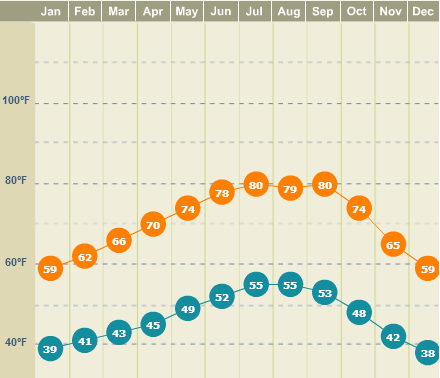
The weather- It's amazing. Check out the average temperatures. I rode my bike to work year round. You won't have to deal with scorching summers or frozen winters, it's a very moderate climate.

average monthly temperatures for mountain view, CA
Mountain View, CA


The fun- There is a whole lot to do, almost no matter what you're into. Geographically, there is surf, mountains, cities, snow and lakes all within a short drive. It's a great scene for food, music, art, philanthropy, nature, tech and just about whatever else you like.

4 guys on the beach about to surf in pacifica


Oh and of course, to be fair, here are the two biggest cons so you know what you're getting into. 

It's really expensive- Check out this cost of living calculator. It's one of the most expensive places to live in the country. This makes it really difficult to buy a house. Though, companies in the bay generally pay more and your salary is likely to increase much faster because of how competitive it is for talent. I've found that besides housing, a lot of the cost comes down to your lifestyle choices. If you only spend on what is most important to you, it's possible to save.

It's a bubble- You know, when the general population forgets that anyone else lives or thinks any differently? It's not always like that and not everyone is trapped, but check out this funny article about some serious bay area first world problems.

If you can handle not buying a house for a while, I believe the pro's seriously out weigh the con's. It is a fantastic place to live and have a career. Your quality of life will likely be improved. If you need more convincing, shoot me an email, or marry someone from the bay area like I did.

Monday, May 26, 2014

Twitter Basics for MBA students

Twitter can be a great tool for students to build professional relationships, find a job and stay up to date on what is happening in your industry. Before you dive into Twitter, I recommend you get a few of the basics down. Below are a few basics you want to master. These tips are for people that want to use Twitter strategically for their careers, if you don't care about that, you probably won't find this advice as helpful.

1. Decide what you're going to tweet about. It's easier to build a following on Twitter when people know what you will be tweeting about. If you're all over the place, it'll be harder. This does not mean if you tweet about marketing, you can't tweet about your favorite NBA team. Just try to be consistent. For example, I tweet 90% about marketing, technology and networking. 10% is whatever I'm in the mood to tweet about.

2. Remember that everything is public. Think before you tweet. People have lost their jobs for the things they have tweeted about. A PR executive with some racists tweets is the latest casualty.

3. Put up a professional profile picture. Just like LinkedIn, if you're using Twitter to expand your network, it can help to have a professional picture. At least put some kind of picture up. No one wants to see the Twitter egg.

twitter egg with an x


4. Fill out the description. This is your chance to let people know what you'll be tweeting about. I recommend you link to your LinkedIn profile, blog or personal website in the description.


example of a twitter description

5. Post consistently. If you never post, many people will eventually stop following you.

6. Follow people. Follow anyone or anything that interests you. Follow companies you are interested in or people you admire.

7. Favorite tweets. This is a simple way to let people know you like what they are sharing. Twitter notifies you when someone favorites your tweet. This is also a great way to get someone to follow you back.

example of favoriting a tweet

8. Retweet people. This is a way for you to share great content that you find with your network. Just like when you favorite, the user is notified and there is a good chance they might follow you back.

9. Respond to tweets. The great thing about Twitter is most people on it are the sort of people that want to have conversations with the Twitter community. Comment on posts, or respond to questions. You'll be surprised who might respond back.

10. Be yourself. The more authentic the better.

Twitter can be a valuable tool as you navigate your career. Have fun with it and find what aspect of Twitter creates the most value for you personally. Good luck and happy tweeting.


Monday, May 5, 2014

Why I Chose BYU For My MBA

Where you go to get your MBA is a very complicated and personal decision. I've had a fantastic experience these past two years at BYU, so I thought I'd write down some of my thoughts on why I came to BYU for my MBA. Below are my top reasons for choosing BYU.

Old school BYU logo

It's a great school. It's a top 30 program. Different rankings put BYU in different places, but Forbes most recently ranked BYU as #17.

You can not beat the cost. I did not want debt loads from school to dictate any career decisions post MBA. The cost of tuition and living in Provo is astronomically low. Graduating with little or no debt gives you much more flexibility in your career choices right out of school and the next 5-10 years. US News just put out a list of which schools provide the most financial value at graduation. BYU is the highest ranked school on the list. To put this in perspective, I saved my entire second year's worth of tuition over my summer internship.

The people I knew who went there.  I did not know it at the time, but growing up I was surrounded and influenced strongly by BYU MBA's in my church, community and Boy Scout activities. Even as a teenager, I admired and respected those leaders. During my undergrad I met and became friends with some BYU MBA's and I really liked them and admired their career ambitions. They seemed like my kind of people.

It gets me to where I want to go. I really thing this is the bottom line for choosing a business school. Can it help you get to where you want to go? When I looked at all the random things I want to do in my career, I determined that a BYU MBA would help me at many steps along the way. This was a tough question for me because it takes a lot of educated guessing. For example, just because you go to a school that your dream company recruits out of, does not mean you'll get a job at that company. You might be better off at a different school and a little more hustle. It's also really hard to value the future value of a network from any school. It might be worth millions or close to nothing. I just made the best decision with the data I had.

It's a tough decision to figure out what school to go to, but I'm extremely happy with my choice. I think a big part of that is that after I decided, I didn't look back and made the most of all the opportunities I had during those two years. Whatever I put into the experience, I got back even more. It could not have worked out better.

P.S.- Cafe Rio might have had a slight part in the decision.
Picture of a cafe rio burrito

P.S.S. - Here is a quick video on how I felt about the professors a BYU, feel free to check it out too. 


Monday, April 21, 2014

How A Pen And Some Paper Can Set You Apart During Your Internship

Last year I went with a few classmates to Boeing’s headquarters in Washington as part of a recruiting tour of a variety of different companies in the Seattle area. As we sat with their recruiter in charge of hiring MBA’s, she began to rave about two of our classmates that had interned there the year before. Finally, one of us asked, “What did they do that set them apart?”
Her answer really surprised us. She did not talk about their projects, GMAT scores or long hours. She talked about how both of them were the most engaged interns over the summer. She explained that everywhere they went they carried notebooks, always listening attentively and taking notes. She also said they were always prepared with questions. There was never a moment where they zoned out and started checking their phones.

a picture of a pen on a paper notebook

Companies often go to great lengths to create a great internship experience for you, show your appreciation by doing your best to be engaged. Our generation often gets accused of having short attention spans. You can prove them wrong. As you go to your internships this summer, take notes, ask questions and set yourself apart.

Monday, April 7, 2014

5 Ways Students Can Protect Their Online Reputation

Have you ever Googled yourself? If you haven't done it before, do it right now. Now this thought may be a little scary but 80% of employers will Google you before they invite you for an interview. What employers find online about you is at best an incomplete picture of who you are but it's just a fact of life. Below are a few ideas of what you can do to make sure your online reputation is stellar.
a picture of someone googling their own name
1. Revisit the privacy settings on all your social channels. Most social media sites have a "view as public" link to make sure you know what is public and what is private. Anything that you'd be concerned about a future employer seeing, make sure to delete it or that it is private. You might be surprised what photos the whole world can see.
2. Set up two factor authentication for increased security. Getting any of your accounts hacked sucks. The last thing you want is SPAM being sent through your Facebook, LinkedIn or Gmail accounts to all your contacts. Two factor authentication makes it so you have to enter in a code from a text message to your phone, to be able to log in from a new computer. For example, if someone in Nigeria tries to log into your Gmail with your password, unless they have your cell phone, it will be impossible for them to get into your account.
picture of two factor authentication
3. Set a Google alert for your name. This works best if your name is not very common. If you do have a common name try to add another keyword like your place of employment, hometown or school. These alerts will send you an email anytime Google finds a new website or article where your name is mentioned.
4. If you don't have one yet, create a LinkedIn profile. LinkedIn is the worlds largest professional network. LinkedIn is the best place to establish your online professional presence and reputation. On your LinkedIn profile you can make sure employers find the information you want them to find. Check this other post I wrote which explains the LinkedIn basics all students should be doing.
5. Put up a professional picture for your LinkedIn and Google profiles. LinkedIn is a professional social network, so the picture should be professional. I recommend a professional picture for your Google profile too because it can show up in the emails you send through Gmail. If you are using Gmail for professional communication, you want a professional picture to show up.
example of google plus picture showing up in gmail


A little bit of effort can go a long way to protect your online reputation. Now is the best time to set yourself up for success in preparation for when that recruiter, from your dream company, Googles your name.

Monday, March 31, 2014

Book Summary: The Ultimate Question 2.0 by Fred Reichheld.

Last summer I asked Nick Besbeas (LinkedIn's CMO) if he could recommend some marketing books for me to read to prepare to come back to LinkedIn after I graduated. I just finished one of the first books, The Ultimate Question 2.0 by Fred Reichheld.


After reading each book, you'll get a post that has my key takeaways. Here they are......

Avoid "bad profits" at all costs. Bad profits are "profits earned at the expense of customer relationships." A great example of bad profits are the late fees from Blockbuster. Late fees were one of their biggest sources of profit. People were all too eager to abandon Blockbuster for companies like Netflix, who took advantage of Blockbuster's mistake. Netflix built their business off of the mantra "no late fees". Bad profits is one of the main reasons Blockbuster went down in flames.

Current accounting systems encourage bad profits. The book highlighted that current accounting systems do not distinguish between bad and good profits. This makes having another measure that you put alongside your financial reports extremely important. Naturally, the book recommended net promoter score

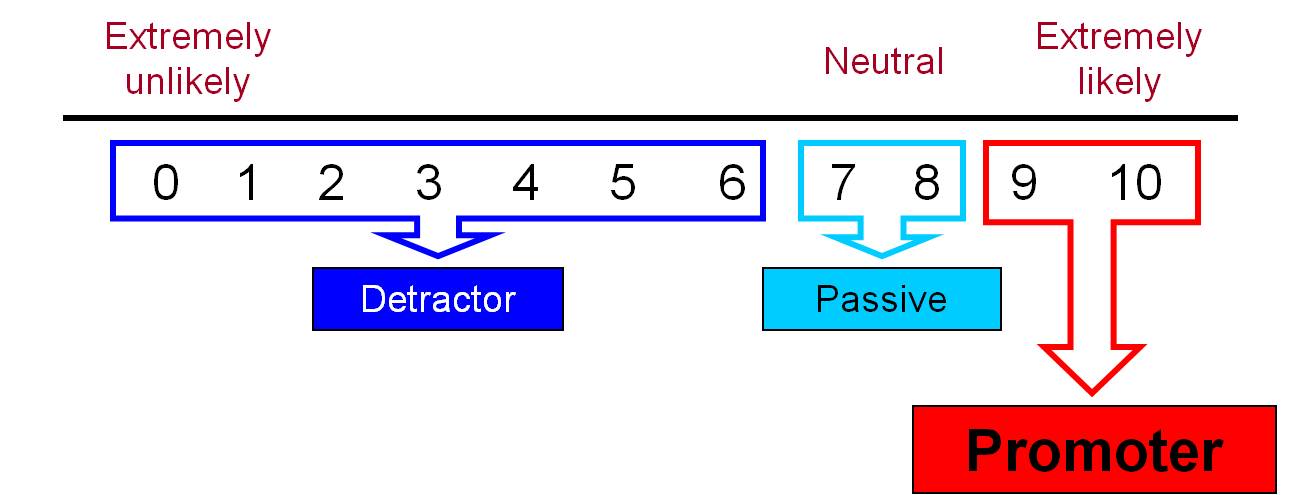
Net promoter score is a simple way to measure customer satisfaction. Net promoter is a customer satisfaction methodology based on one simple question you ask your customers. That question is "How likely is it that you would recommend this company, or this product or service, to a friend or colleague? Most often used on a scale of 0-10. This helps you bucket customers into detractors, passives and promoters.


Though the concept is simple, it is extremely difficult to implement. The companies highlighted in the book as successful users of the net promoter methodology all had large initiatives supported throughout the entire company to focus on using the net promoter score. For the system to really work, everyone from the management to the front line workers need to be committed to trying to create promoters among their customers.

Customer obsession is the winning strategy. Net promoter score, when implemented correctly, is a great forcing function to get the whole company thinking about whether they are creating positive customer experiences everyday.

This is fantastic book if you thinking about revamping how you measure customer satisfaction at your company or thinking of adopting the net promoter score methodology. Anyone that has to create customer satisfaction surveys for their job should read this book. Tactically speaking, if you're creating surveys the shorter the better and this one simple question can tell you a lot.