Tuesday, August 12, 2014

How To Get A Job Interview At LinkedIn

The simplest and most straightforward way to get a job interview at LinkedIn is to meet the job qualifications for the job you are applying for and have a current employee refer you.

This advice works for a lot of companies, but I've seen it work first hand to get a job interview at LinkedIn. In my short time at LinkedIn, I've referred two people for jobs and one of them got the job and the other one is in process. Both of the people I referred were interviewed promptly after my referral. 

This is my buddy John, I referred him to LinkedIn and now he sits behind me. 

In general, referrals from current employees are much more likely to be seen by a recruiter, than from applying online. It should be no surprise that this is particularly important at LinkedIn where one of the 5 dimensions of the culture is "relationships matter." To learn more about what that means, check out this post from LinkedIn's founder Reid Hoffman. A referral is really key to getting an interview at LinkedIn. 

If you are hoping to get an interview at LinkedIn or have more questions about how to get a job at LinkedIn, feel free to contact me. I'll try to help you as much as I can. There are many people that helped me land at LinkedIn and I'm happy to pay it forward. You can contact me through this blog or on Twitter. I hope this post on how to get a job interview at LinkedIn helps you land your dream job!

*As usual, this is my personal opinion and not representing LinkedIn the company.

Tuesday, July 29, 2014

My Welcome To San Francisco Hug

I moved to San Francisco to take a job with Salesforce right out of my undergrad without having ever visited San Francisco in my life. I was excited for the adventure, but generally speaking I was freaked out, intimidated and paranoid about some aspects of big city living.


My first day of work I needed to catch a shuttle from the financial district to take me to new hire training in the San Mateo office. I was crashing at a friends house in the West Portal neighborhood at the time. I was a really worried about getting lost, missing the shuttle etc., so I left a few hours early. I got there really fast (the MUNI is not crowded at 6am). I got to the shuttle stop outside of Salesforce HQ and was just standing there for over an hour trying not to look like a country bumpkin. I did not know what the dress should be so to play it safe, I wore my best suit with a french cut shirt.

As the sun was coming up, some guy that was probably a little drunk came up to me and said. "DANG, YOU LOOK LIKE CLARK KENT!" He then proceeded to give me a bear hug. After he let me go, he looked me in the eye and said "wait, you also look like that kid from Jerry Mcguire." He then turned around and walked away. Welcome to San Francisco.


Clark Kent

Kid from the movie
Me


Monday, July 14, 2014

Tips To Prepare For A Job Interview At LinkedIn

I've had a lot of friends, or friends of friends get interviews at LinkedIn lately. I've been asked several times if I have any tips for the interview process. I thought I'd compile a few tips of my own here and link to some great advice too. As usual on my blog, this post is my personal opinion and not representing LinkedIn the company. Here are my tips to prepare for a job interview at LinkedIn.

meme about a recruiter adding you on LinkedIn

1. Spruce up your profile. It should already be awesome, but if not, it's better late than never. It will go a long way to show that you actually believe in and understand the company. Great picture, work history....the whole nine yards.

2. Check Glassdoor.com for interview questions by role. You can find the list here.

3. Read this article on Mashable. If you scroll down to the end they get into some great interviewing tips.

4. Understand the culture. Read this interview of Jeff Weiner in the NY Times and check out the Slideshare below on our culture.


5. Think about the product. Don't be surprised if you get a question like, "what is your favorite feature?" or "what feature would you add?"

6. Be authentic.

7. Show your passion. If you really are passionate about the mission of the company or the products, make sure it come through in your interview.

8. Get the names of your interviewers and do your homework. Check out the LinkedIn profile of those that are interviewing you beforehand, use that information to your advantage. See if you have mutual contacts.

Good luck with your job interview at LinkedIn. I hope these tips help you prepare. If you have any other tips that you think would help you prepare for a job interview at LinkedIn, please put them in the comments. Also, if you're looking for general job interviewing tips, please check out How to Prepare for a Job Interview

Monday, June 30, 2014

How To Get A Job At LinkedIn

Last week I started a full time job at LinkedIn. I feel very fortunate to work for such a great company. I learned a few things as I went through the process on how to get a job at LinkedIn, so I thought I'd share the knowledge with future LinkedIn employees out there.

Picture at LinkedIn Beijing office
This is a picture of me visiting LinkedIn's Beijing office when I was traveling through China a few weeks before I started. 

A disclaimer to my readers, this is my personal opinion and is in no way endorsed by LinkedIn. This advice is based off my personal experience and observations.

Here are 4 steps that will guide you on your journey to get a job at LinkedIn.

1. Have the right skills- Like most places, if you read through the job description and you do not have the skills required it will be extremely difficult to get that job. If you do have those skills, make sure they are explicitly stated in your resume using the same vernacular as in the job description. If you don't have them...well get busy!

2. Leverage relationships- When I was trying to get a job at LinkedIn, I found a second degree connection on LinkedIn that was working in the group I wanted to work in and got an introduction. He is now my boss's boss. You can read more about how I did it on a post I wrote for the LinkedIn blog last summer here. A personal connection to the company and employee referral is probably the most important step to get a job at LinkedIn.

3. Show your passion- At LinkedIn people are really passionate about what they do and they want to work with other passionate people. Make sure it comes out in your resume and interviews.

4. Do your homework- While this is probably a little more general advice for any job, I think it is still worth mentioning. Find out as much as you can about the company, the team you're interested in, the products and the individual decision makers. This will help you impress those looking at your resume and interviewing you.

If you'd like to work at LinkedIn or have more questions about how to get a job at LinkedIn, feel free to contact me. I'll try to help you as much as I can. There are many people that helped me find my dream job and I'm happy to pay it forward. You can contact me through this blog or on Twitter. I hope this post on how to get a job at LinkedIn helps you land your dream job!


Monday, June 16, 2014

Why You Should Think About Moving To Silicon Valley

After leaving Silicon Valley to go to business school in Utah, a lot of friends and classmates have asked me my thoughts about living and working there. I've accepted a job back in the bay, so of course this is my opinion and completely biased, but here are the top reasons for heading back.

Picture of the golden gate bridge from underneath

The companies. Check any list of top places to work in the US (CNN, Forbes) and you'll see many companies from the bay area. Not only that, but many of these companies are experiencing fast growth. My experience has been where there is growth, the opportunities are all around. There are few places in the world where so many great companies are in such close proximity. This makes it extremely competitive for talent, so companies have to treat you well to keep you.

Logos from Google, Twitter, LinkedIn and Apple


The people. The bay area is top in the nation for overall education level. I have found that people in the bay area are driven, educated, passionate and generally open minded. I remember shortly after moving there, when for first time I met someone at work that went to an Ivy league school, I was really intimated. After a few months, I stopped being intimated and tried to learn as much as I could from the smart people around me. Surrounding myself with such talented and ambitious people really motivated me to step it up. Just living there broadened my vision of what I could accomplish in my career and life.

The weather- It's amazing. Check out the average temperatures. I rode my bike to work year round. You won't have to deal with scorching summers or frozen winters, it's a very moderate climate.
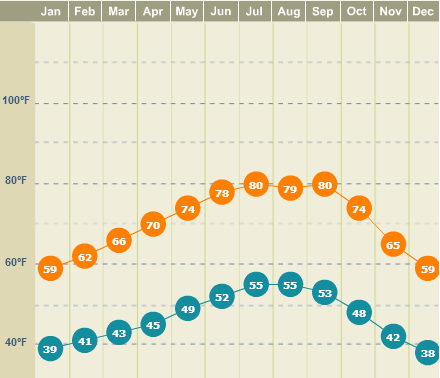
average monthly temperatures for mountain view, CA
Mountain View, CA


The fun- There is a whole lot to do, almost no matter what you're into. Geographically, there is surf, mountains, cities, snow and lakes all within a short drive. It's a great scene for food, music, art, philanthropy, nature, tech and just about whatever else you like.

4 guys on the beach about to surf in pacifica


Oh and of course, to be fair, here are the two biggest cons so you know what you're getting into. 

It's really expensive- Check out this cost of living calculator. It's one of the most expensive places to live in the country. This makes it really difficult to buy a house. Though, companies in the bay generally pay more and your salary is likely to increase much faster because of how competitive it is for talent. I've found that besides housing, a lot of the cost comes down to your lifestyle choices. If you only spend on what is most important to you, it's possible to save.

It's a bubble- You know, when the general population forgets that anyone else lives or thinks any differently? It's not always like that and not everyone is trapped, but check out this funny article about some serious bay area first world problems.

If you can handle not buying a house for a while, I believe the pro's seriously out weigh the con's. It is a fantastic place to live and have a career. Your quality of life will likely be improved. If you need more convincing, shoot me an email, or marry someone from the bay area like I did.

Monday, May 26, 2014

Twitter Basics for MBA students

Twitter can be a great tool for students to build professional relationships, find a job and stay up to date on what is happening in your industry. Before you dive into Twitter, I recommend you get a few of the basics down. Below are a few basics you want to master. These tips are for people that want to use Twitter strategically for their careers, if you don't care about that, you probably won't find this advice as helpful.

1. Decide what you're going to tweet about. It's easier to build a following on Twitter when people know what you will be tweeting about. If you're all over the place, it'll be harder. This does not mean if you tweet about marketing, you can't tweet about your favorite NBA team. Just try to be consistent. For example, I tweet 90% about marketing, technology and networking. 10% is whatever I'm in the mood to tweet about.

2. Remember that everything is public. Think before you tweet. People have lost their jobs for the things they have tweeted about. A PR executive with some racists tweets is the latest casualty.

3. Put up a professional profile picture. Just like LinkedIn, if you're using Twitter to expand your network, it can help to have a professional picture. At least put some kind of picture up. No one wants to see the Twitter egg.

twitter egg with an x


4. Fill out the description. This is your chance to let people know what you'll be tweeting about. I recommend you link to your LinkedIn profile, blog or personal website in the description.


example of a twitter description

5. Post consistently. If you never post, many people will eventually stop following you.

6. Follow people. Follow anyone or anything that interests you. Follow companies you are interested in or people you admire.

7. Favorite tweets. This is a simple way to let people know you like what they are sharing. Twitter notifies you when someone favorites your tweet. This is also a great way to get someone to follow you back.

example of favoriting a tweet

8. Retweet people. This is a way for you to share great content that you find with your network. Just like when you favorite, the user is notified and there is a good chance they might follow you back.

9. Respond to tweets. The great thing about Twitter is most people on it are the sort of people that want to have conversations with the Twitter community. Comment on posts, or respond to questions. You'll be surprised who might respond back.

10. Be yourself. The more authentic the better.

Twitter can be a valuable tool as you navigate your career. Have fun with it and find what aspect of Twitter creates the most value for you personally. Good luck and happy tweeting.


Monday, May 5, 2014

Why I Chose BYU For My MBA

Where you go to get your MBA is a very complicated and personal decision. I've had a fantastic experience these past two years at BYU, so I thought I'd write down some of my thoughts on why I came to BYU for my MBA. Below are my top reasons for choosing BYU.

Old school BYU logo

It's a great school. It's a top 30 program. Different rankings put BYU in different places, but Forbes most recently ranked BYU as #17.

You can not beat the cost. I did not want debt loads from school to dictate any career decisions post MBA. The cost of tuition and living in Provo is astronomically low. Graduating with little or no debt gives you much more flexibility in your career choices right out of school and the next 5-10 years. US News just put out a list of which schools provide the most financial value at graduation. BYU is the highest ranked school on the list. To put this in perspective, I saved my entire second year's worth of tuition over my summer internship.

The people I knew who went there.  I did not know it at the time, but growing up I was surrounded and influenced strongly by BYU MBA's in my church, community and Boy Scout activities. Even as a teenager, I admired and respected those leaders. During my undergrad I met and became friends with some BYU MBA's and I really liked them and admired their career ambitions. They seemed like my kind of people.

It gets me to where I want to go. I really thing this is the bottom line for choosing a business school. Can it help you get to where you want to go? When I looked at all the random things I want to do in my career, I determined that a BYU MBA would help me at many steps along the way. This was a tough question for me because it takes a lot of educated guessing. For example, just because you go to a school that your dream company recruits out of, does not mean you'll get a job at that company. You might be better off at a different school and a little more hustle. It's also really hard to value the future value of a network from any school. It might be worth millions or close to nothing. I just made the best decision with the data I had.

It's a tough decision to figure out what school to go to, but I'm extremely happy with my choice. I think a big part of that is that after I decided, I didn't look back and made the most of all the opportunities I had during those two years. Whatever I put into the experience, I got back even more. It could not have worked out better.

P.S.- Cafe Rio might have had a slight part in the decision.
Picture of a cafe rio burrito

P.S.S. - Here is a quick video on how I felt about the professors a BYU, feel free to check it out too.